

Get Ready This Summer For Next Year’s Wildflowers
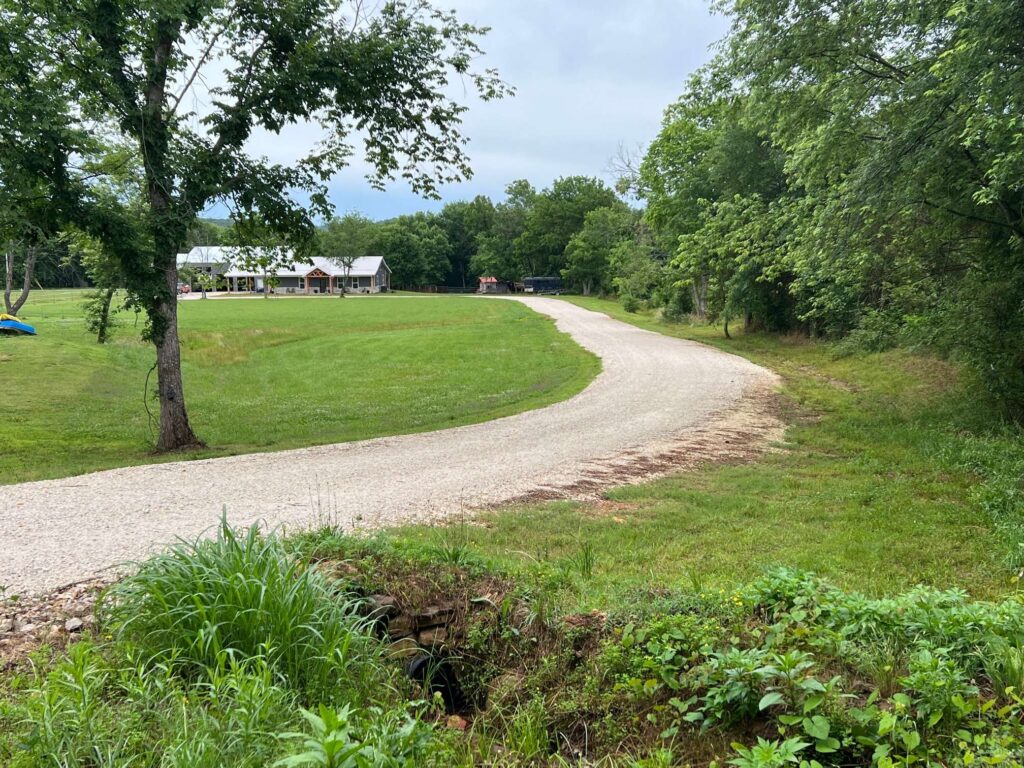
First step: preparing the ground. And NOW is a good time. Each fall, we are repeatedly asked, “Am I too late to plant wildflower seed? Will it be okay to plant my seed in the fall or winter?” The answer to the latter is YES because that is when nature plants them. Late summer, fall, and winter is when the seeds of most native species of wildflowers and grasses mature and make their way into the soil. If you have prepared the site and are ready to go for fall or winter planting, you are simply imitating nature. This is especially true for seed mixes that contain only native species. Sometimes the soil at your site has already been prepared for you–as when a utility company has cleared a right-of-way or a new driveway has been added (see photo). But if your ground is full of vegetation that you want to convert into a wildflower or native grass meadow, then summer is the time to get it ready. Undesirable existing vegetation must be actively growing for you to control it. So, summer is the time! Click here to see our planting guide which includes suggestions on preparing your ground this summer for planting in the fall.
Butterfly Desert
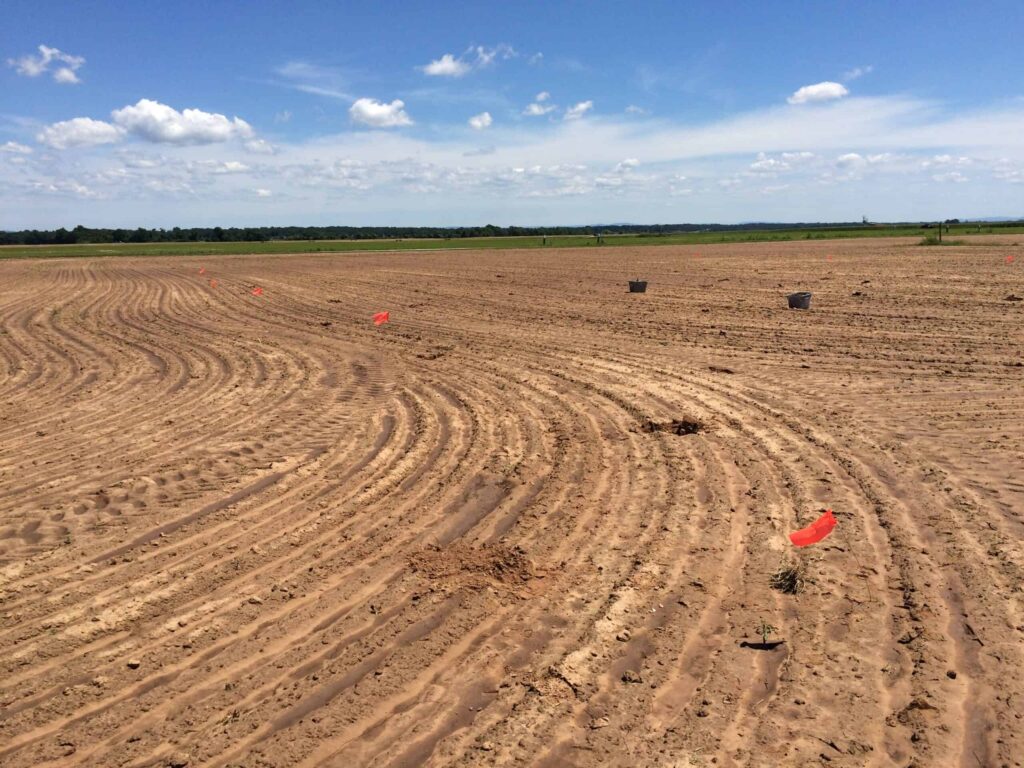
Several years ago, during October, I was working in a soybean field in Stuttgart, Arkansas. I walked along the edge of a mature planting of soybeans—some with dry, stems and papery pods, others with yellowing leaves. The plot was maybe ten acres, with many more acres of dry soybeans and rice in adjacent fields. The bordering field had just been “floated” with a laser-leveling rig to get it ready for planting winter wheat–another ten acres of absolutely, bare dirt. Walking along the edge of the two fields, I noticed a monarch butterfly drifting lazily through the air in the sporadic, unpredictable pattern they often fly (probably driven by chemical cues). The soybeans were ready for harvest so had no flowers. The butterfly was making its way across the barren, plowed field. A few minutes later, another Monarch floated by headed in vaguely the same southwesterly direction as the earlier one–towards Mexico, their winter destination. It occurred to me that these pretty butterflies, seemingly nonchalant in their herky-jerky flight pattern, actually were in a desperate search for food. I don’t know how far a Monarch is able to fly without re-fueling, but these little fellows were in for some slim pickin’s for quite a spell—there was not a blooming flower for hundreds of acres, as far as the eye could see. This agricultural land was a barren desert to them from a calorie standpoint, except for a weed here and there in a bar ditch along the section roads. The area used to be part of an expansive native prairie known as the Arkansas Grand Prairie. The county where it is located is called, Prairie County. That is why it is so productive for growing rice, wheat, and soybeans today. A few miles to the north is a long, narrow corridor of prairie remnant that has been set aside along US Highway 70 which runs parallel to and just south of Interstate 40. The prairie reserve is about 25 miles long, but only about 30 yards wide, between the two-lane highway and an old railroad bed. In October, the prairie remnant lights up with bright yellow blossoms of Compass Plant and Goldenrod, of Partridge Pea and Tickseed Bidens, the gray-white plumes of Boneset, and the pretty purple Ironweed. I try to imagine the sights and sounds and smells—the experience—of being in that very spot two hundred years ago. Before the European sodbusters spilled across the mighty Mississippi River from Tennessee, from Mississippi, from Alabama, to claim some of that rich prairie for themselves, plowing it under to grow cotton, the cash cow of those days. That 30-yard-wide swath is like a small museum of what was once unbroken prairie for miles and miles in every direction. This prairie is a 30-minute drive north from those butterflies I watched—and that only if you are traveling 60 miles per hour without stopping–hardly a butterfly’s style. On the one hand, agriculture has changed a lot of land from deep forest to open land, with flowers in the ditches and ecological “edges” that produce more flowers than you would see in the original dense forest. The winners there are butterflies and open-field birds. The losers are forest animals, like squirrels, bears, and turkeys. With every management or environmental shift comes a whole list of winners and losers. Just like economic shifts in human ecology—recessions, war, trade battles, energy cost spikes—there are economic winners and losers in the same sort of way. In fact, calories are to a butterfly what dollars are to a Wall Street investor. Large expanses of row crops are the caloric equivalent of an economic depression for a Monarch butterfly trying to make it to Mexico. Yes, we must grow food for us humans. But it remains true that mature crops and bare soil are a desert for a butterfly searching for sugary nectar—their fuel. The good news is that there is a movement afoot to convert some less productive agricultural land from cultivation and back into natural habitats. Such conservation restoration projects can earn carbon credits or offsets for corporations who purchase the land and who pay to seed it in prairie grasses and forbs, or plant forest trees. We see this as a win-win situation for corporations, farmers, non-profits, and the environment. Holland Wildflower Farm is excited to be a part of this noble endeavor. One last thought: we don’t have to convert thousands of acres of farmland to benefit pollinators like the migrating Monarch butterflies. Even small plantings of native wildflowers can be a lifeline. Have you ever driven on a highway only to look down at your gas gauge and see it dangerously low–and no gas station in sight, exit after exit? Even a small planting of natives can be that refueling station for a migrating monarch or other pollinator. That’s something nearly all of us can do.
When to plant wildflowers? Native seeds can be successfully planted in fall and winter.
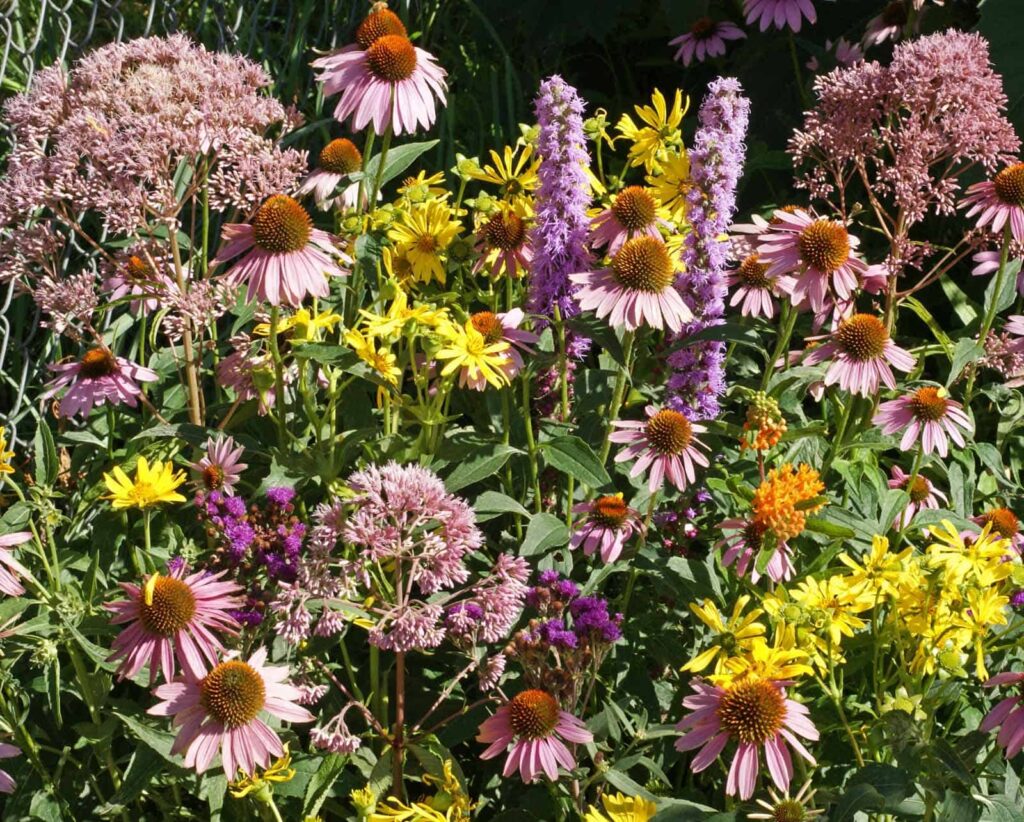
Late summer, fall, and winter is when most native species of wildflowers and grasses mature and make their way into the soil. If you have prepared soil ready to go for fall or winter planting, you are simply imitating nature.
National Pollinator Week!
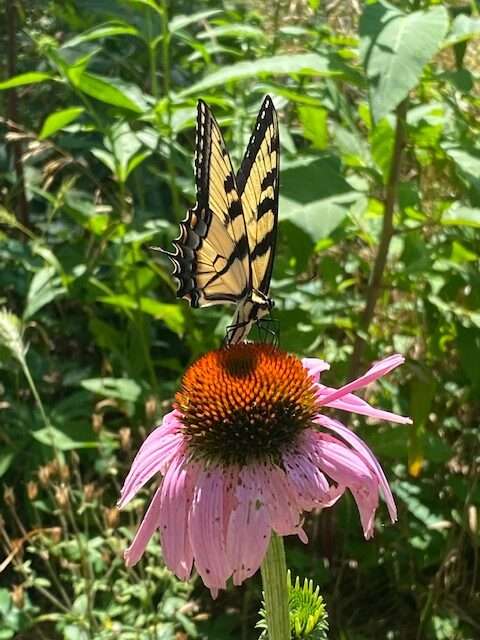
This is National Pollinator Week, an annual celebration in support of pollinator health, initiated and managed by Pollinator Partnership. Check it out in this link: https://pollinator.org/pollinator-week
How to Consider Gardening as Exercise
When you think about it, it’s not that hard to see the similarities between exercising and gardening. They both support your mental and physical well-being and they both positively affect your mood. Raking, mowing, and trimming are just 3 activities that can improve your physical fitness while gardening. Here are more gardening tips and benefits that will support your mind and body. 1. Helps Improve Your Diet Having a garden means you are in control of how and when you harvest your food. Growing your own food can seem intimidating but it’s very simple. You decide on what fertilizers to use and what pesticides may come in contact with your food. By gardening, you create a more diverse and healthy diet for yourself. Food in its freshest form is packed with vitamins, minerals, and antioxidants. Start small and plant foods that you would want to eat. Fruits and vegetables such as strawberries, raspberries, lettuce, and carrots are just a few of the easiest produce that you can grow at home. 2. Improve Your Mental Health Not only is it stretching your muscles, but gardening also promotes better mental health. Being able to connect with nature through a garden is a great way to enhance your well being, while boosting your energy. When completing each gardening task, you can take time for yourself and focus on being present. As a form of therapy, gardening has been shown to decrease feelings of anxiety, stress, and depression. 3. Supports a Healthy Immune System Gardening just might be the answer to your sniffles and coughs this pollen and flu season. Research shows that beneficial bacteria in the soil may help strengthen your immune system. Coneflowers, elderberries, aloe vera, and garlic are all great plants to have in your garden to help support a healthy immune system. Being out in nature gives you a chance to soak up a lot of sunshine and get vitamin D, which is essential for our overall health. 4. Promotes Better Brain Health While your plants are growing, your mindset is also growing. Being in a garden promotes the ability to constantly learn. Studies have shown that being productive in the garden can help stimulate your brain and lower the occurrence of dementia. Helpful Gardening Tips Now that you’ve learned some of the benefits of gardening, here are a few helpful tips once you get the job started. Be safe with any physical activity you do and that includes gardening. Use the proper form to help prevent any pain or injuries from occurring. While gardening you should wear gloves, proper workout clothing and sunscreen and make sure to clean your tools regularly. Alternate between gardening activities to avoid exhaustion. Create a gardening routine. For example, start with some stretches and finish off watering your plants to cool down. Stretch and wash your hands after gardening to keep yourself safe from illness or injury The photo above is by Leigh Skomal on Unsplash. To find out more benefits to gardening as well as tips for gardening your day to better health, check out the infographic below. Attribution for the graphic.
Business Plans in the Natural World

Every species of wildflower or native grass has a strategy for making a living: for dispersing seeds or for sprouting from dormant roots. For capturing maximum sunlight to fund plant growth and flower production, for pollination, for pest avoidance, and for a myriad of other life issues they must address. In fact, humans and every other life form on earth must deal with similar issues. We must all–as a species and as individuals—have a way to deal with the threats and opportunities we are presented with. Think of it as a “business plan”. For instance, vines do not invest in thick, woody trunks to compete with trees for sunlight. They just climb up the thicker stems and trunks of trees and shrubs that have already made that investment, then spread their leaves over the other plant’s leaves to capture the needed sunlight. That is their “business plan” or strategy for competing for limited sunlight. Or think of bird species that avoid the harsh realities of a North American winter by migrating to milder climes in the tropics of Central and South American. They are like human “snowbirds” who can afford multiple homes to live where the weather is always pleasant. Avoidance is a common theme in the business plans of many organisms. One strategy that we see in woodland wildflowers is to avoid the stressful conditions of summer by simply going dormant. The photos show a stand of woodland wildflowers in one of our garden beds as they were in late March and again in late July. In the background are Virginia bluebells (Mertensia virginica) that have been blooming for two or three weeks already; in the foreground are Green trillium (Trillium viridescens). In a July photo of the same spot, the bluebells have completely disappeared and the trillium plants are yellow-brown and shriveled. This garden bed is well-drained, being at least three feet above the surrounding landscape, receives no supplemental irrigation, and is dominated by a thick cover of English ivy, a strong competitor. Even still, the bluebells and trillium have thrived in this bed for decades. As temperatures rise to stressful levels and water competition intensifies between neighboring forbs, shrubs, and trees, these spring ephemerals just check out—dying back above ground, with only minimal moisture needs for the below ground roots and crown. The ecologist David George Haskell suggests still another important angle to this avoidance strategy in his delightful book, The Forest Unseen—A Year’s Watch in Nature (Penguin Books, 2012). Summer not only brings competition for water and nutrients, but for something even more basic: sunlight. Spring ephemerals, which appear for only brief periods, emerge often before the overstory trees and shrubs have fully leafed out. Sunlight penetrates to the forest floor for only a limited time in early spring before it is intercepted by the expanding leaves of taller vegetation. These woodland ephemerals, like bluebells and trillium, have a unique business plan: get your leaves out before the big guys do and capture that sunlight; produce your blooms; pollinate; set your seed; store energy to fund this year’s survival and next year’s new growth; and then die back and wait it out. But other wildflower species actually thrive in the hot, summer months, especially those that grow in open areas where they are not competing with an overstory of leaves for sunlight. Species like those in our Little Bit Shady Wildflower Seed Mix can thrive in either full sun or partial shade. Next time you become curious about why a plant or animal does what it does, think about it in the context of its larger “business plan”.
Bob’s Bio

Hi there. I’m Bob Holland, co-founder of Holland Wildflower Farm. Since many of these blog posts are written by me, I should perhaps introduce myself. My appreciation of wildflowers and wild plants goes back to my childhood—my grandmother loved and taught us about native flowers. I remember she especially loved Joe Pye Weed. Her brother-in-law, my “Uncle Hutch”, was Dr. Ross E. Hutchins, a professional naturalist and photographer who wrote nature books and articles for national magazines. My own training began when I signed up for a course at Oklahoma State University called, Environmental Biology, my first ecology class. I was immediately hooked and changed my major to Wildlife Ecology. After a couple of years as a field research botanist, I obtained a master’s degree in Plant Pathology (plant diseases) and spent much of my career as a research biologist working on tree diseases and soybean diseases. All along the way, I sustained my love and fascination with wildflowers and native grasses. Julie and I visited the Nature Conservancy’s, Joseph H. Williams Tallgrass Prairie Preserve, near Pawhuska, Oklahoma this summer—buffalo roaming a 50,000-acre ocean of prairie grasses, wildflowers, and birds. The more we get out and romp through natural places, the more our love for it is reignited. Another passion of mine is acoustic music, especially fiddle music. Beautiful music and the beauty of nature–that’s what drives me. Holland Wildflower Farm is here to help you bring the beauty of native grasses and wildflowers to your spot on this globe. My posts are meant to help you along in that quest.
Erosion Control Blankets
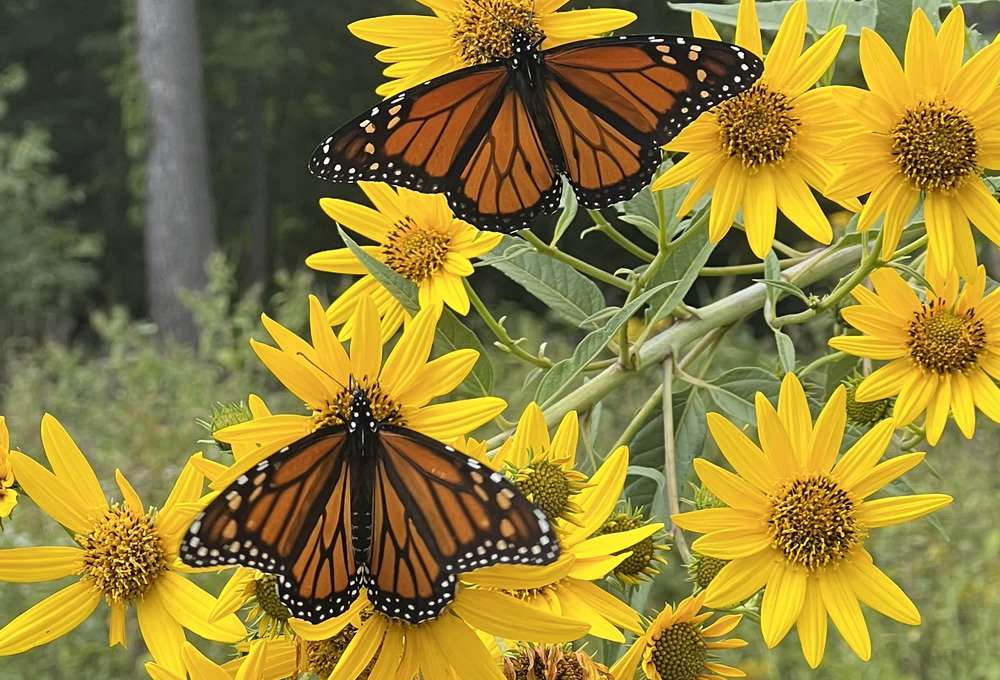
Erosion Control Blankets and Seeding Wildflowers on Slopes If your seeding project includes an area of steep slopes, then you will need to consider how to hold your investment in place. A slight slope (less than 25 or 30%) can be stabilized with a light mulching of straw (such as wheat stubble) or other mulch material (such as pine needles or bark chips). A 25% slope means that there is a 2.5-foot change in elevation for every 10 feet in distance up or down the slope (or 3 inches of elevation change for every foot of distance). The Natural Resource Conservation Service (NRCS), a part of the USDA, recommends the use of erosion control measures*, such as erosion control blankets, for any slope of 33% to 50%. Anything steeper than that will need rock riprap or terracing with retaining walls. After seed germination, the roots of each new plant will interlock with one another below the surface, like laced fingers, to hold the soil in place. Above the ground, plant leaves and shoots will diffuse the direct impact of raindrops on the soil. But initially, steep slopes must be protected. Erosion control blankets, placed over recently seeded slopes, act to stabilize the soil to prevent seeds and soil from washing away and the cutting of erosion ruts into the hillside. Blankets prevent wind erosion and soil crusting and increase rainfall infiltration into the soil profile. Erosion control measures also protect any streams, rivers, and lakes downhill from your site—and the wildlife that live there–from clouded water and silted bottoms. Plant seedlings can emerge through spaces within the blankets, when then disintegrate over time and leave a natural-looking vegetated slope behind. What are they made of and where do you find them? Erosion control blankets (ECB’s) come in various lengths and widths, with various netting materials, and various mulching materials. Most common is a thin plastic netting (one or two ply) that photodegrades over 1-3 years with an inner mulch layer of straw, excelsior (aspen shavings), or coir (coconut fiber). Straw or excelsior are best and both allow light to get through to seeds and soil. This is important because wildflower seeds are very small and each species has specific germination requirements, often involving day length and soil temperature. The one-ply blankets containing straw tend to be the lowest price ($0.05-0.35 per square foot) depending on if the order includes shipping or not. Another good choice is excelsior batting. It is good since it also allows the light to the seeds and soil is one-ply containing excelsior (shredded aspen) and may be a little longer lasting than straw. The box store sources, like Lowe’s and Home Depot tend to be in the $0.15-0.17/sq ft range. When I was checking I found Home Depot had better prices than Lowes, but may depend on where you are… Other online sources include Forestry Suppliers, Gempler’s, Erosion Control Products, and A.M. Leonard Horticultural Tool and Supply. These suppliers may offer blankets in the $0.05-0.10/sq ft range, but this price is before the shipping cost is added in. A few notes about installing Erosion Control Blankets (ECB’s): – Install the ECB only after soil preparation and seeding are complete. – Remove all rocks or soil clods 1.5 inches or larger before installation. – Leave at least a foot of extra blanket at the top of the slope for anchoring: dig a 6-inch deep trench across the top of the slope (or as deep as you can, if rocky soil), heaping the soil uphill from the trench; lay the extra blanket into the bottom of the trench, folding half of the extra underneath itself (like your curled fingers), pointing down the slope; cover the trench and top of the ECB with the soil; anchor with stakes. This keeps heavy runoff water from flowing under the blanket and washing out soil and seeds. – The ECB should be anchored to the soil using metal wire staples or wooden stakes, driven through the blanket and remaining flush with the soil. Loose or sandy soil be a problem for anchoring the ECB – make sure the anchors are long enough to hold at the trench and seams. – If you require multiple blankets running parallel down the slope, overlap the blanket edges with a minimum of a 4-inch overlap and stake or staple the seams periodically to ensure that no gaps develop from wind or rain. –Check for any damage or displacement after a heavy rain. For more information check out this USDA informational PDF (click image to view):
Frost Flowers
About three years ago, my wife and I were taking a winter walk to the back of our property. It was a nice, sunny morning, but had frosted hard during the night and the air temperature was still below freezing. After crossing the creek we walked into a clearing between two tree-lined areas. We saw the strangest meadow of flowers we’d ever seen–the flowers were made of ice! Scores of them! We determined that each was coming from the broken stub of a woody stalk from a perennial plant that grew the previous season. We eventually learned that they were a perennial composite wildflower called Frostweed (Verbesina virginica). The next year we were able to establish them in our backyard. (I also learned not to allow the pretty white flowers to go to seed else all of my non-mowed areas will become a meadow of Frostweed). The stalks grow 5-7 feet tall and can attract butterflies and other insects. The Wildflowers of Arkansas book says that the leaves are eaten by deer. They grow along streams, roadsides, open slopes and valleys and bloom in late summer and fall. The really cool thing is that in late fall or on certain days of winter–when the ground is well-saturated and unfrozen, but the nights are cold–the bottom of the frostweed stems will still actively pump water from the perennial roots up through the base of the stem. Since the above ground portion of the stem is dead wood and usually has broken off, the water has nowhere to go but out. The water hits the cold air and immediately turns to ice. The water pressure inside the plant continues to push it out in gorgeous ribbons of ice called “ice flowers” or “frost flowers“. Each one is unique. The thin ribbons are adorned with minute striations or lines–like spun ice–when viewed up close, formed by ribs in the tissues at the base of the plant. By late morning they have all disappeared due to the warm sun. Their ephemeral beauty makes them all the more special. I’ve seen this nondescript plant for years without giving it any special thought or knowing its name. Now I notice it all along the roadsides and bordering riparian areas (wooded corridors along creeks and rivers). I’ve seen the pretty ice flowers along Hwy 16 as I drive to work.
Best Native Grasses for Landscaping Projects
Wildflowers bring color and charm to any part of your property, but sometimes you want to make a dramatic statement. Native grasses will really bring interest and another textural dynamic to your landscape. We like to seed native grass mixtures like the Tallgrass Prairie Grass Mix or Shortgrass Prairie Grass Mix adjacent to wildflower areas, so these mixes can be ordered separately. Prairie Plantings Prairie plants have little trouble with insects and require little care. If you want to replace the prairie in your landscape, we recommend sowing flowers and grasses together in the Tallgrass Prairie Flower and Grass Mix, or the Shortgrass Prairie Flower and Grass Mix. The seeds of native grasses (and flowers) fall into two types of environments. A drier climate will most likely have native grasses of the shortgrass prairie, while a wetter climate will grow the native grasses of the tallgrass prairie. The Tallgrass Prairie grasses are Little Bluestem, Indiangrass, Big Bluestem, and Switchgrass. The shortgrass prairie grasses are Blue Grama, Prairie Junegrass, Sand Dropseed and Sideoats Grama. Native grasses and prairie forbs (prairie flowers) can be frustratingly slow to establish, but with good soil preparation and weed-free compost you should be successful and the results will be beautiful.
