

Go Wild!
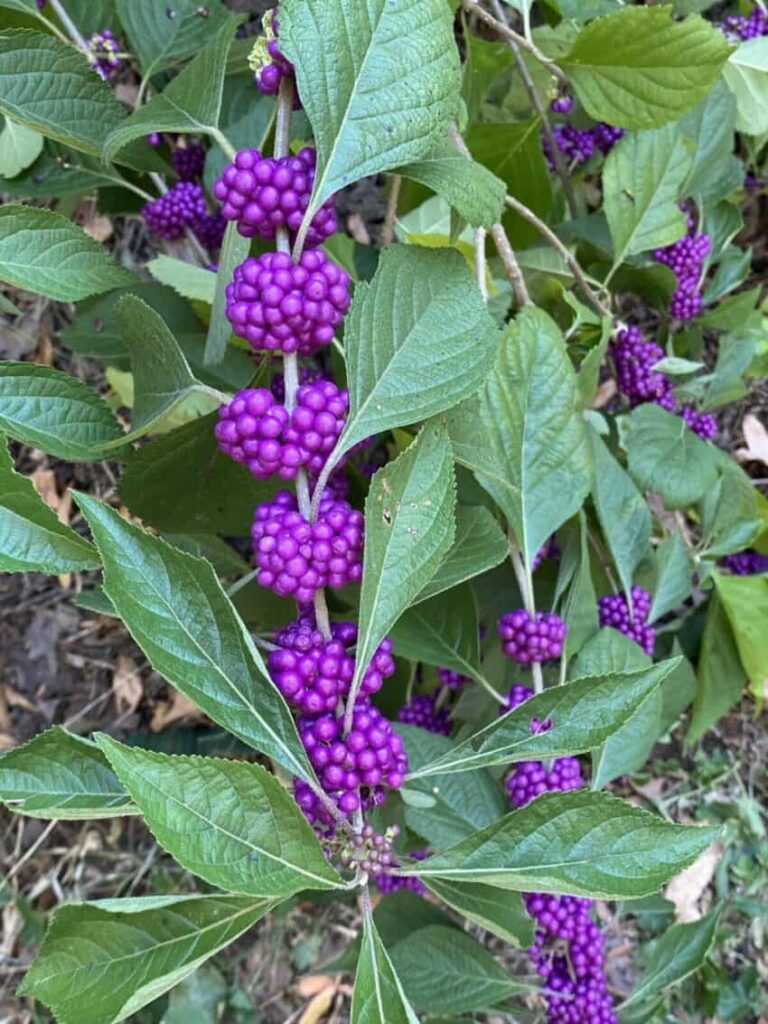
American Beautyberry (Callicarpa americana) is a shrub native to the Southeastern US, various Caribbean islands, and the Gulf Coast of Mexico. Lush green foliage is followed by pink flowers and gorgeous lavender-purple berries which last well into the winter, until birds and other wildlife have picked them clean. The pictured plant has been in a bed in our landscaping for several years now. Last fall an early and severe freeze killed it to the ground. But this spring, slowly but surely, it leafed back out and is now as lush as ever and blooming again. We had other shrubs—non-natives–that died back from the same freeze and never re-sprouted. The point is that plants native to your area are there for a reason. Native species have evolved over millennia to the conditions in that area. This early freeze was not American beautyberry’s first rodeo with an occasional early, or late, hard freeze. Freezes farther north from our location are too often and too severe, so Beautyberry is not native there. When you use native plants, you are hedging your bets with the tried and true. Go wild! Check out the USDA Plant database website (plants.usda.gov) for range maps and other information on a particular species or genus. You can find out exactly where a native plant is found in nature by zooming-in on the map to switch from a North American map with state ranges down to state maps which highlight at the county level. Click this link to see an example using American beautyberry. The database and range maps also include many non-native species used as landscape plants. Native plants are better adapted to bounce back from unusual weather events–and “unusual” weather appears to be the new normal.
When to plant wildflowers? Native seeds can be successfully planted in fall and winter.
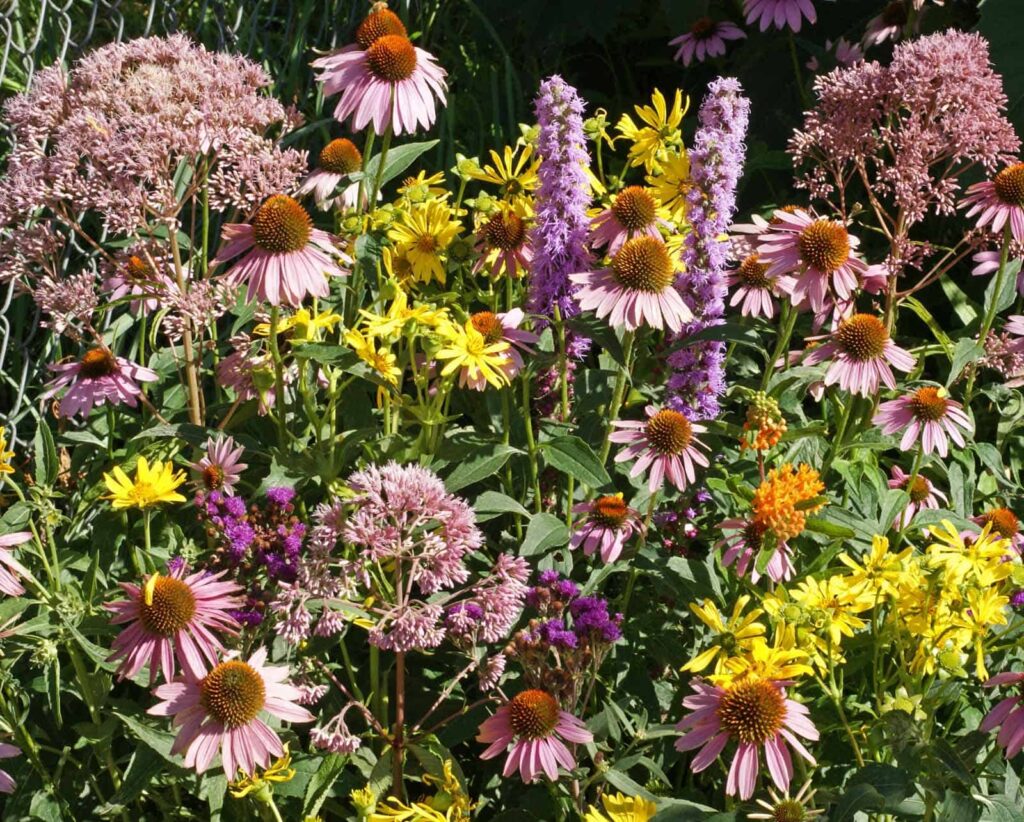
Late summer, fall, and winter is when most native species of wildflowers and grasses mature and make their way into the soil. If you have prepared soil ready to go for fall or winter planting, you are simply imitating nature.
How Much Wildflower Seed Do I Need
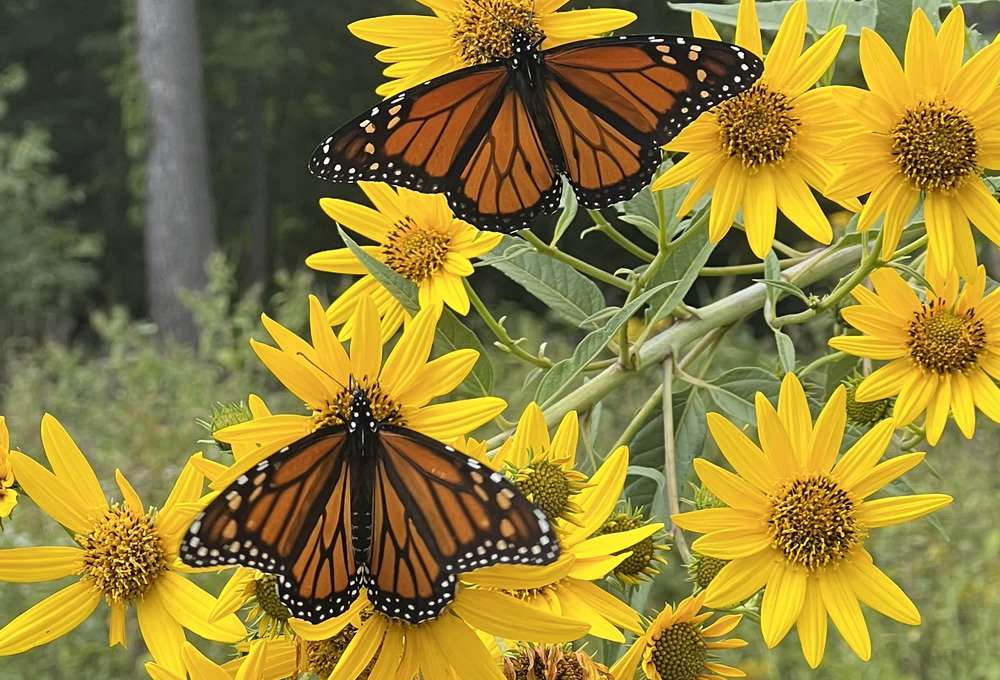
Start by measuring the wildflower seed project site How much wildflower seed do I need? Well, first decide how much ground you will expose to seeding wildflowers or native grasses. Get the square footage by measuring length x width. So then if you have 200 feet by 10 feet you have 2000 square ft. Be aware of the type of soil and the weed competition you may encounter with unwanted species whose seeds may be present in the soil bank. If the site has been kept mown, and is not a weedy area you will be able to use a lesser rate than in an area where a lot of competition from weeds or grass is expected. How to choose which wildflower or grass seed mix to use? Our mixes are designed for a purpose or a region. So once you’ve determined your goal (example: attracting pollinators), choose which Holland Wildflower Farm seed mix or mixes are best suited for your purpose. Then decide how much seed you need. We advise that you seed your site when you have taken measures to minimize weed competition and prepare your soil for seeding. The seed rates are in the mix descriptions and they are listed in the table below: recommended seeding rates for each wildflower seed mix or native grass mix. Explanantion of seed rate ranges and your location and specific site conditions Project analysis will help determine how much seed you will need. Each of our seed mixes has its own recommended seeding rate found in the description for that mix (see table below). The recommendation for most mixes will come with a range, such as 10-20 pounds per acre. This means that one pound of seed will cover between 2,000 and 4,000 square feet. (A strip 20 feet wide and 100 feet long equals 2000 square feet.) So, do you need 10 pounds per acre or 20 pounds? In the southern, especially southeastern areas the weed competition is greater and the highest seed rate is generally recommended. Additional considerations are given after the table. Thank you for using your ground to make the world a better place. Seed Mix Chart gives recommended rates for wildflower or native grass mixes below Seed Planting Rate for Holland Wildflower Farm Mixes Seed at the high rate for best results. Wildflower or Native Grass Mix Name pounds per acre square feet covered by one pound (at high rate) wildflowers, grass, or both type of mix Eastern Native Habitat Seed Mix 11 4,000 both habitat Floodplain Seed Mix 20 2,000 both habitat Native Upland Meadow Wildlife Seed Mix 20 2,000 both habitat Wildlife Food Plot Seed not given not given both habitat Shortgrass Prairie Wildflower Seed Mix 9-18 2,000 wf habitat Tallgrass Prairie Wildflower Seed Mix 10-20 2,000 wf habitat Bee Feeder Seed Mix 6-12 2,500 wf pollinator Bird & Butterfly Wildflower Seed Mix 10-20 2,000 wf pollinator Bumblebee Buffet Seed Mix 9-18 2,000 wf pollinator Eastern Pollinator Seed Mix 7-14 2,500 wf pollinator Honeybee Feed Seed Mix 6-12 4,000 wf pollinator Hummingbird Seed Mix 5-10 4,000 wf pollinator Monarch Butterfly Garden Seed Mix 12-24 2,000 wf pollinator Native Flower Mix for Monarchs 11-22 2,000 wf pollinator Western Pollinator Native Seed Mix 7-14 4,000 wf pollinator Cottage Garden Flower Mix 7-14 2,000 wf special use Deer Resistant Flower Mix 6-12 4,000 wf special use Eastern Xeriscape Native Wildflower Mix 2-24 2,000 wf special use Golf Course Mix 20-25 4,000 wf special use Little Bit Shady Wildflower Seed Mix 15-20 2,000 wf special use Low Grow Wildflower Mix 10-15 2,500 wf special use Native Perennial Wildflower Mix 7-14 3,000 wf special use Shady Golf Course Wildflower Mix 7-14 3,000 wf special use Western Xeriscape Wildflower Seed Mix 7-14 3,000 wf special use Rain Garden Grass Seed Mix 15 2,500 grass/sedge special use Rain Garden Seed Mix 20 2,000 both special use Wildlife Food Plot Seed not given not given both special use High Plains Native Wildflower Seed Mix 11-22 2,000 wf regional Intermountain Native Wildflower Mix 7-14 2,500 wf regional Midwest Native Wildflower Seed Mix 8-16 2,500 wf regional Mountain Native Wildflower Seed Mix 7-14 3,000 wf regional Northeast Native Wildflower Mix 9-18 1,000 wf regional Northwest Native Wildflower Seed Mix 9-18 2,000 wf regional Southeast Native Wildflower Seed Mix 10-20 2,000 wf regional Southwest Native Wildflower Seed Mix 6-12 3,000 wf regional Texas Oklahoma Native Wildflower Mix 11-22 2,000 wf regional Northeast Native Grass Mix 15 2,500 grass regional Southeast Native Grass Mix 15 2,500 grass regional Southern Plains Native Grass Seed Mix 10 2,000 grass regional Southwest Native Grass Seed Mix 8 5,400 grass regional Western Native Grass Seed Mix 7 5,000-7,000 grass regional High Mountain Native Grass Mix 12 2,000 grass habitat Shortgrass Prairie Grass Seed Mix 6 5,000-7,000 grass habitat Tallgrass Prairie Grass Mix 10 4,000 grass habitat Other considerations about Wildflower and Native Grass seeding rates : Southern states, especially those in the Southeast, should use the highest recommended rate because of the intense weed pressure. Use the higher rate if you expect high competition from weedy species. Weeds can be a problem if the site was not thoroughly prepared before planting–see our Planting Guide–or if it has a history of weeds (weed seeds in the soil), especially from non-native invasive species. A higher rate is advised if the site will not be strawed (lightly mulched with straw or excelsior blankets for short term erosion control) after seeding or irrigated during drought in the first year. We recommend using a light mulch because it will hold moisture to the seed. If your site has rocky or very thin soil, you may want to consider adding a 2-4 in layer of compost to give the seeds enough moisture to take hold of the soil. Wildflowers and native grass seeds do NOT need fertile soil but they do need to be able to penetrate the initial soil surface before their small but powerful roots begin
